The Edge of the Map
In June 2023 I was given a brief that seemed, on the face of it, achievable: find a small, rural coastal town somewhere on the west or north coast of Scotland. Dramatic, quintessentially Scottish, with a specific geographical relationship between its buildings and the water that the plot demanded. The production was a remake of a Norwegian drama, so something in that northern European coastal vein, but distinctive enough to justify making it at all. I was fairly confident there must be something up there that would fit the bill. There usually is. It's rarely that simple.
I was given two weeks, sent out alone, and took my own car, which at least meant I had everything I needed in the boot: jackets for all weathers, paper maps, binoculars, spare boots, a camping towel. It happened to coincide with one of the finest early summers Scotland has produced in recent memory. I have been luckier in this job than I probably deserve.
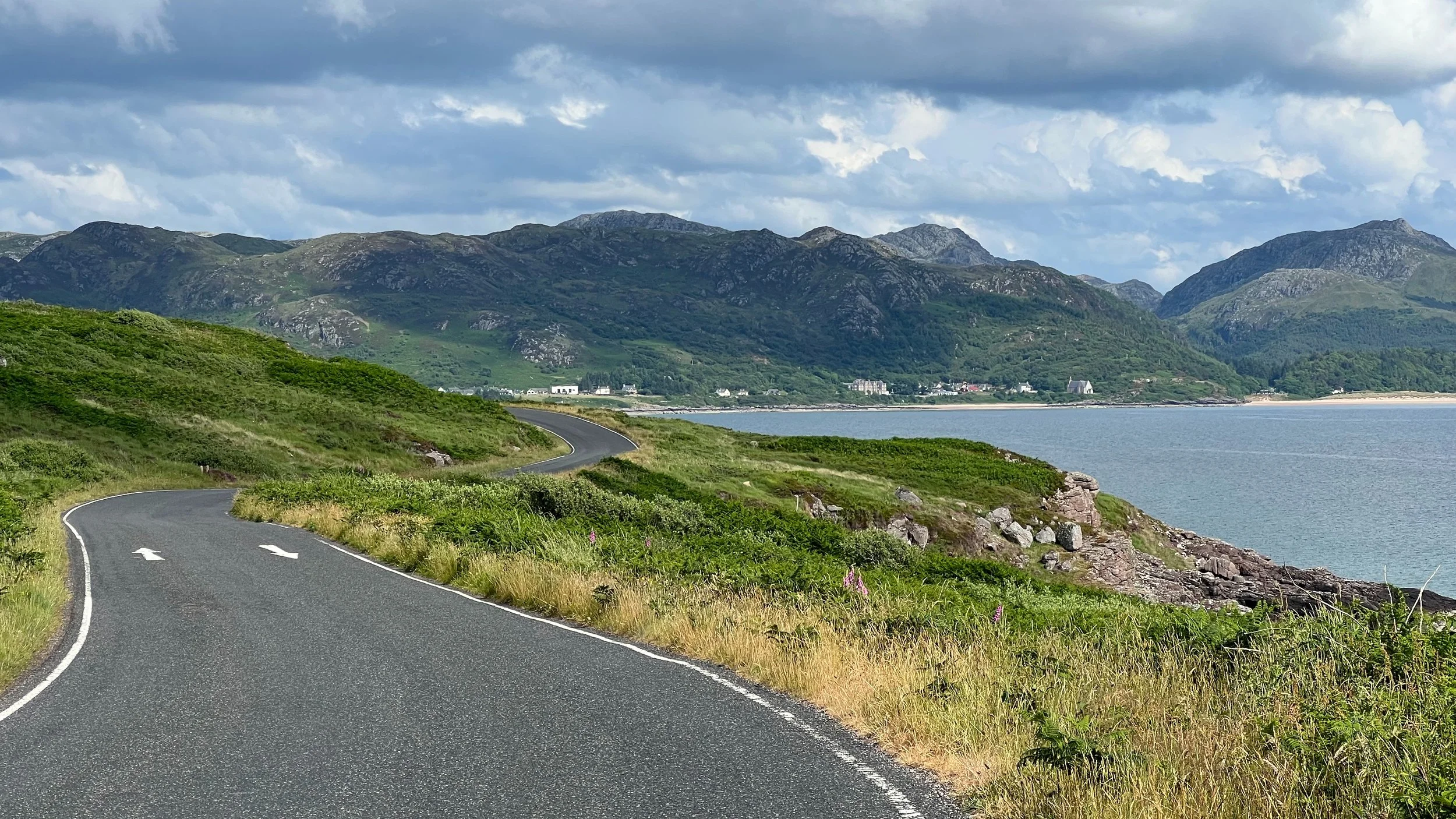
The first week was, without overstating it, close to perfect. The west coast in a heatwave is a different country entirely. The light does things it has no business doing this far north, the water turns colours you'd more readily associate with somewhere considerably nearer to a tropic, and the roads are quiet enough that you can stop wherever you like and just stand there for a while. Which, conveniently, is also the job.
The script featured a surfer as one of the main characters, which presented certain professional obligations. Machrihanish, Camusdarach, Big Sands at Gairloch – all required thorough assessment, ideally from the water. Due diligence demanded it. I am nothing if not thorough.
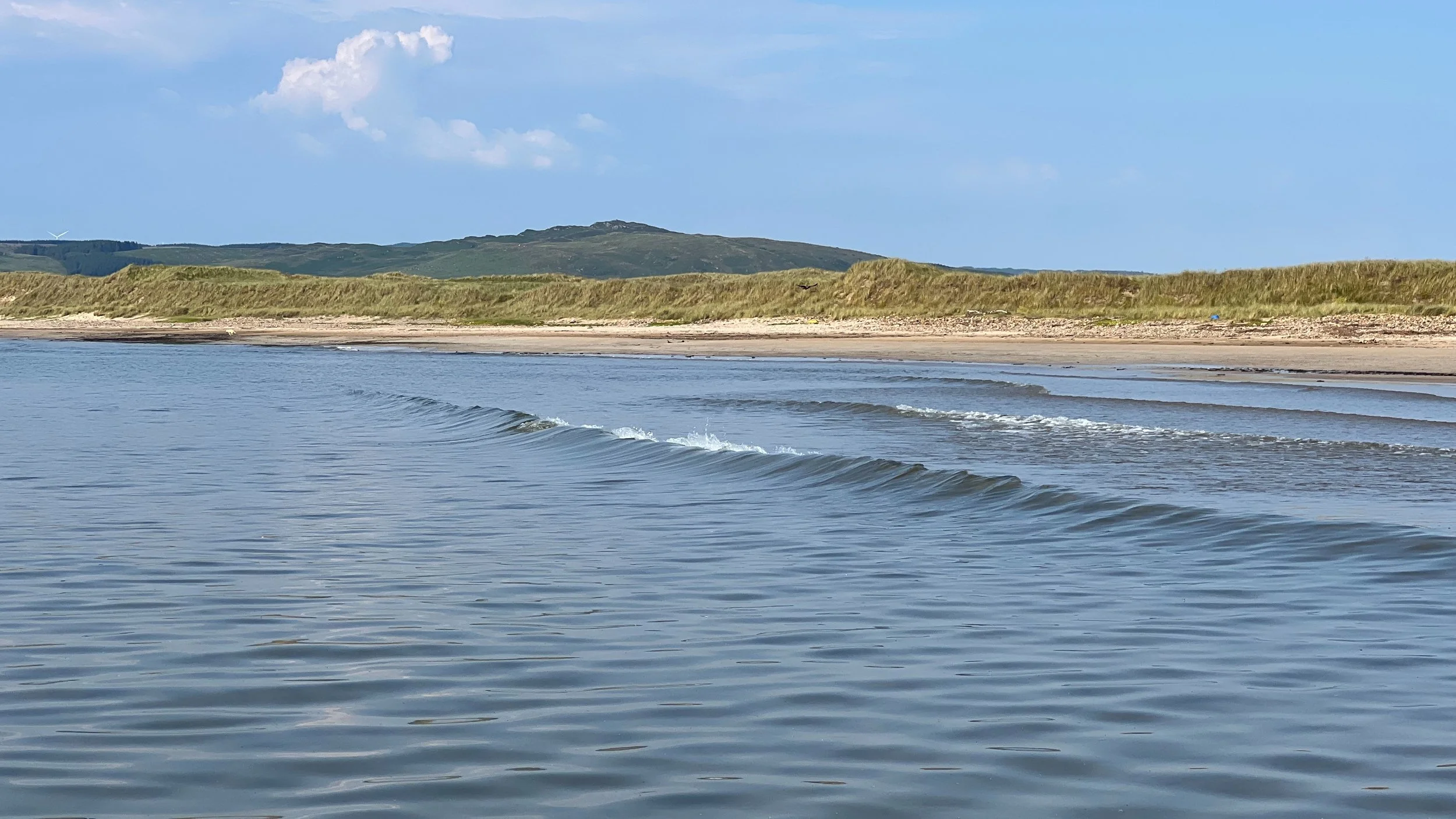
Macrihanish Beach, dutifully surveyed from the water
The evenings were their own reward. I love an overnight on a scouting trip in a way that probably says something unflattering about my domestic situation. Per diems liberating you from the tyranny of sensible choices, the laptop open on the dinner table at half eight, uploading the day's photos on whatever passes for broadband in the highland village you've landed in, a glass of something red making the process considerably more bearable. A long day's work. The lamb was excellent.
One evening early in the trip, the first or second night I think, I was driving at a clip to make dinner at a guesthouse with a good local reputation. I called ahead and was told, apologetically, that the chef wasn't available that evening. He was hosting a folk night at the inn a few miles down the road. The front door of the guesthouse would be left unlocked. My room, the big one on the first floor with the bay window, would be ready. Nobody else would be in. Just come to the inn, he said, and I'll hand over your key.
I drove to the inn. Reels were spilling out the door as I walked up. I checked in, in the loosest sense of the words, across a pub table, key changing hands between tunes. The fish and chips were exceptional. I sat there for a while and felt very glad to be alive.
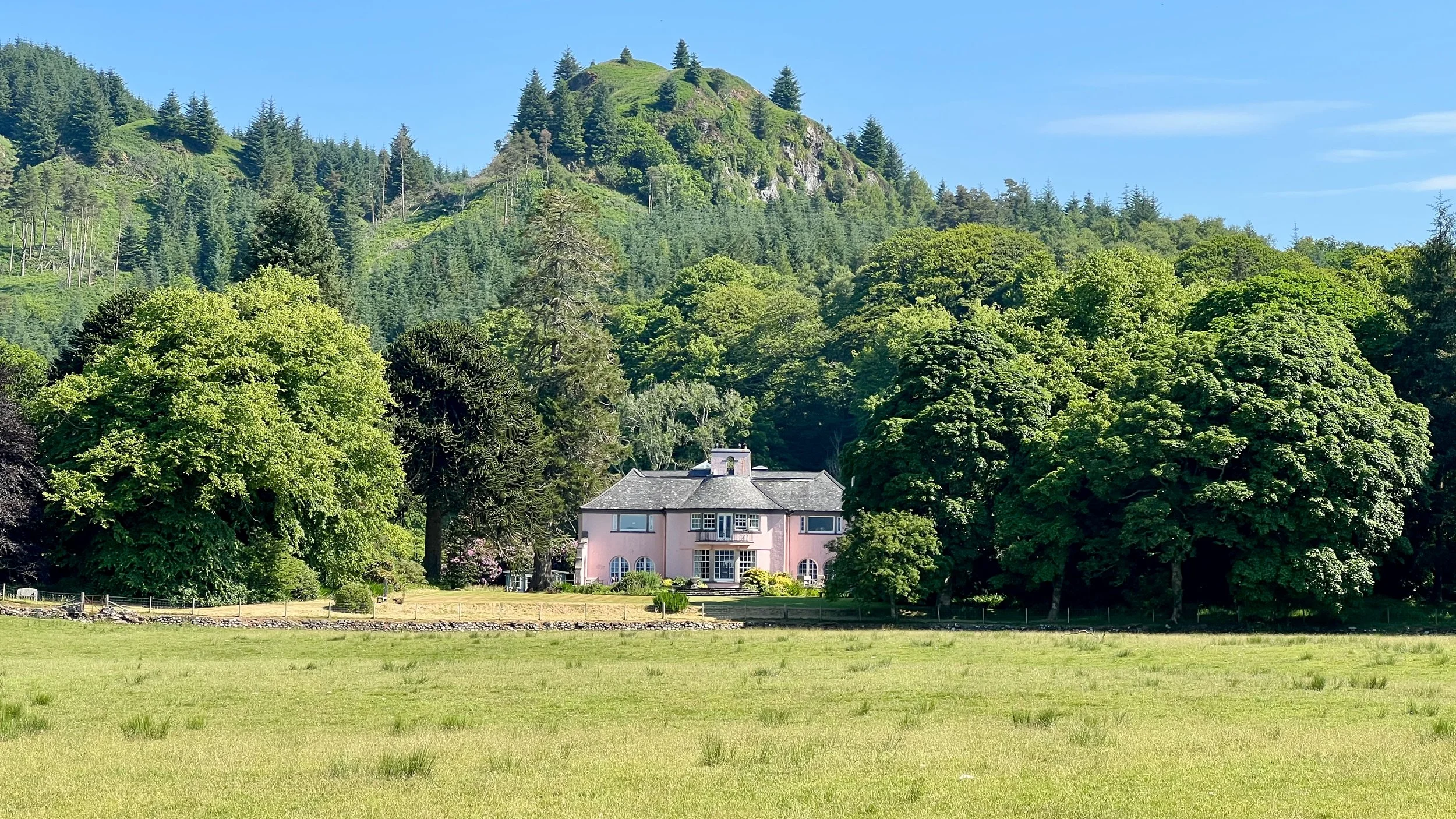
Melfort House, night one’s digs
The brief had specific geographical requirements. The plot needed certain buildings in certain relationships to the water, which meant that the pleasant business of driving beautiful coastal roads was also accompanied each evening by hours bent over maps and satellite images, scanning the following day's coastline for anything that might fit the parameters. You develop an eye for it. You learn to read a bay from above and know, before you've driven the road, whether it's worth stopping or not. You're wrong often enough to keep it interesting. I came close a few times, there were moments where I thought I'd nailed it, but it's rarely the places where you feel certain that end up getting chosen. That's just how it goes.
The director, producer, script editor and writer joined for a five day scout midway through. The four of us in one car, winding along back roads, playing guessing games as the light faded and the evening's hotel got closer. On the last night we stayed at Kylesku Hotel, a beautiful spot beneath the iconic bridge, in about as remote a setting as you can find with a functioning kitchen and a wine list. The weather had been building all day into something dramatic and moody and magnificent. I think the Londoners thought they'd landed on another planet. We ordered champagne. It felt appropriate.
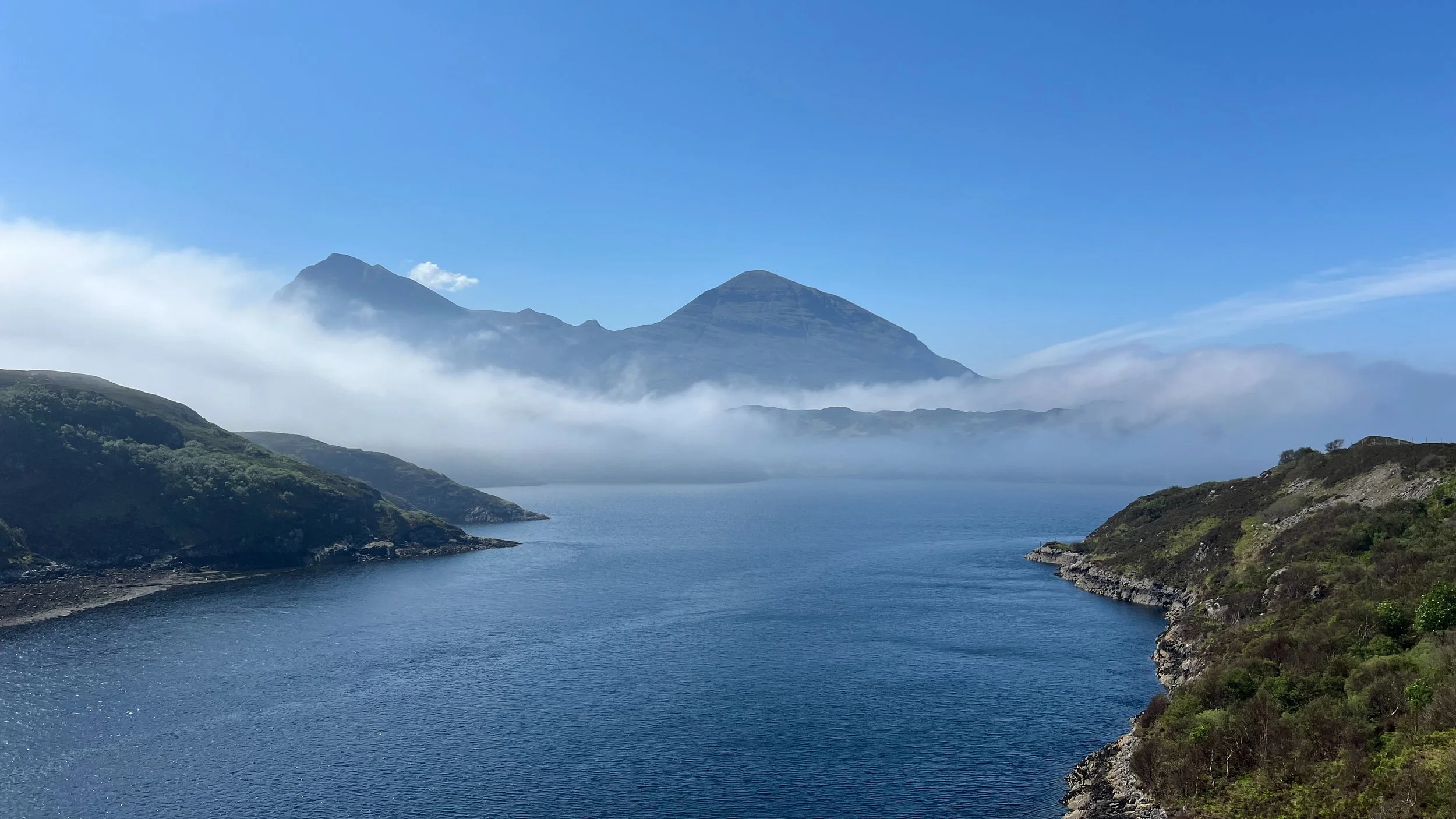
The peaks of Quinaig, from Kylesku
I was stood down for a month or two after that first phase, long enough to go and shoot a Cadbury's commercial in the interim, which felt like a fairly significant gear change, and then sent back out for another couple of weeks, followed by another director's recce. We still hadn't found the one. We'd covered an enormous amount of ground and the parameters hadn't shifted. I think I've now driven every inch of road up the length of the west and north coast. A particular highlight, if that's the word, is what's known locally as the wee mad road, the stretch between Lochinver and just south of Kylesku. It's not just a clever name. Stunning all the way round, genuinely vertiginous in places, with small secret communities tucked into enclaves along the route that you'd never find unless you were specifically looking, or specifically lost. Dropping into some fairytale bay as the sun goes down over the Atlantic, often not a soul around. Occasionally a friendly local to break things up, who'll tell you more about the land and the people and the history of a place in ten minutes than you'd find in any guidebook, and who may, if you ask the right questions in the right way, tell you a thing or two about who owns what.
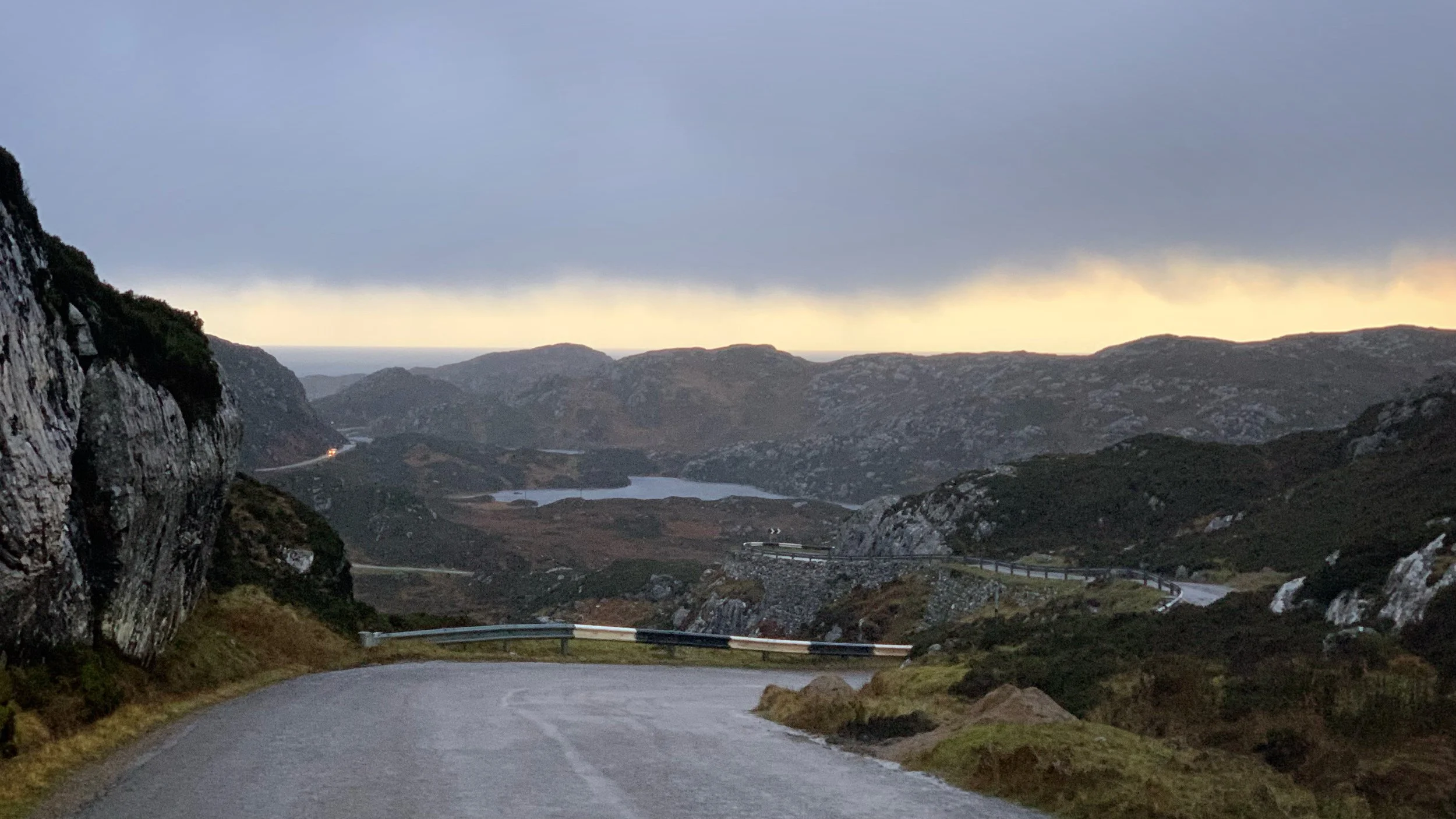
The Wee Mad Road
When the production designer joined, a pragmatic, gentle German chap who was both suitably appreciative of the scenery and, reassuringly, quietly terrified by the scale of the task in front of us, things got interesting. We still hadn't found a single location that ticked every box. Ideas that would have seemed absurd at the start of the process were beginning to sound almost reasonable. Building part of the set into a remote cove. Constructing a larger house around an existing cottage. Piecing the story's geography together from two entirely separate locations.
In the end, that last option is more or less what we did. Part of it in Kinlochbervie. Part of it on Mull. The director, to his credit, acknowledged on the first day of tech recces that this was somewhat insane. We pressed on regardless.
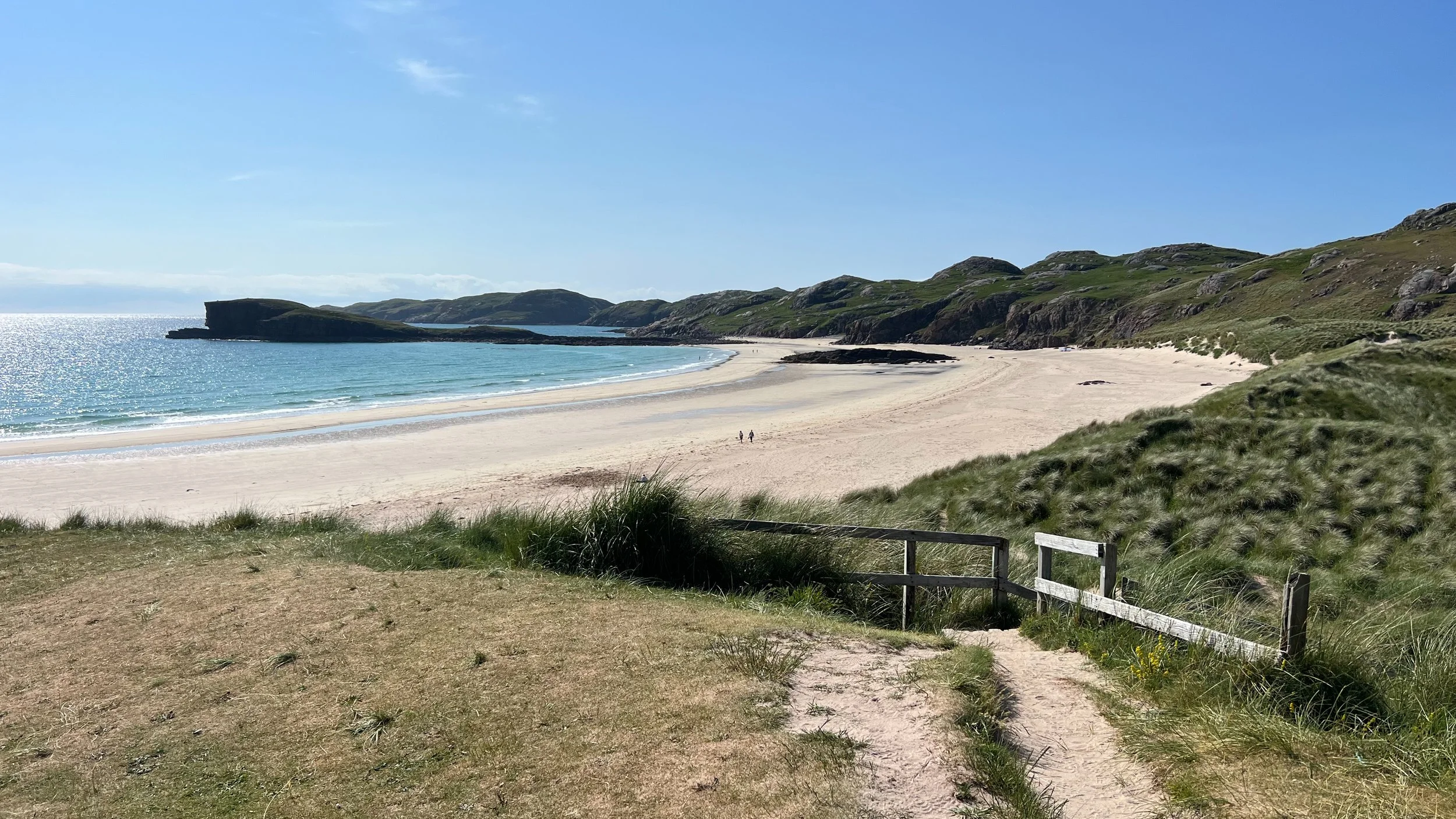
I'd encountered Oldshoremore and the Kinlochbervie area during the initial scout, but it was only once we committed to it as a location that I really got to know that corner of the country. And it got under my skin in a way that very few places have.
Oldshoremore is one of a handful of beaches up there that are genuinely, almost unreasonably beautiful, the kind of empty, vast, quietly spiritual places that make you feel like you've arrived somewhere the rest of the world forgot to find. On that first visit it was bathed in June sun. On later visits there were storms that turned the whole landscape into something almost biblical. Both versions were extraordinary.
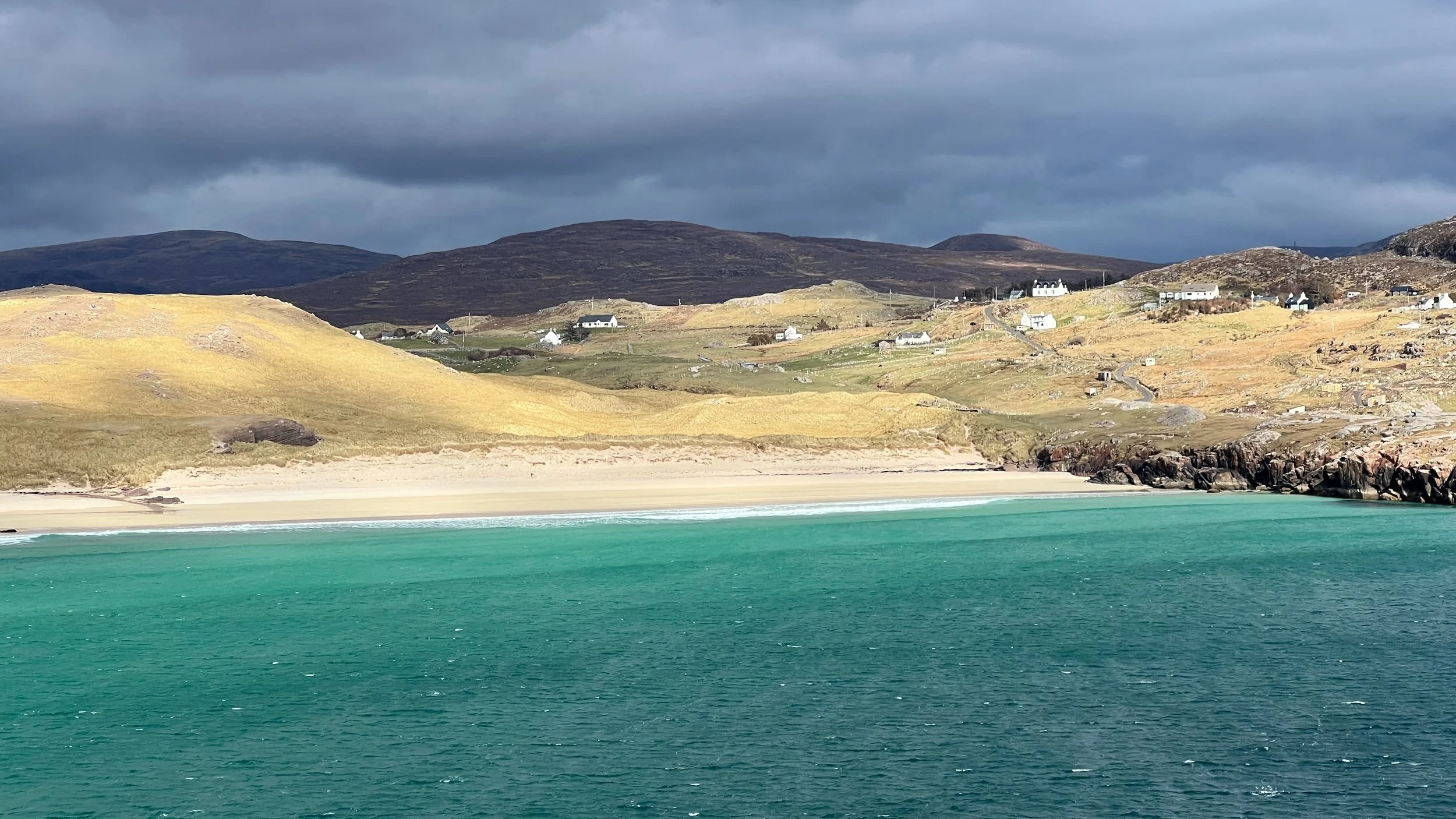
Oldshoremore Beach
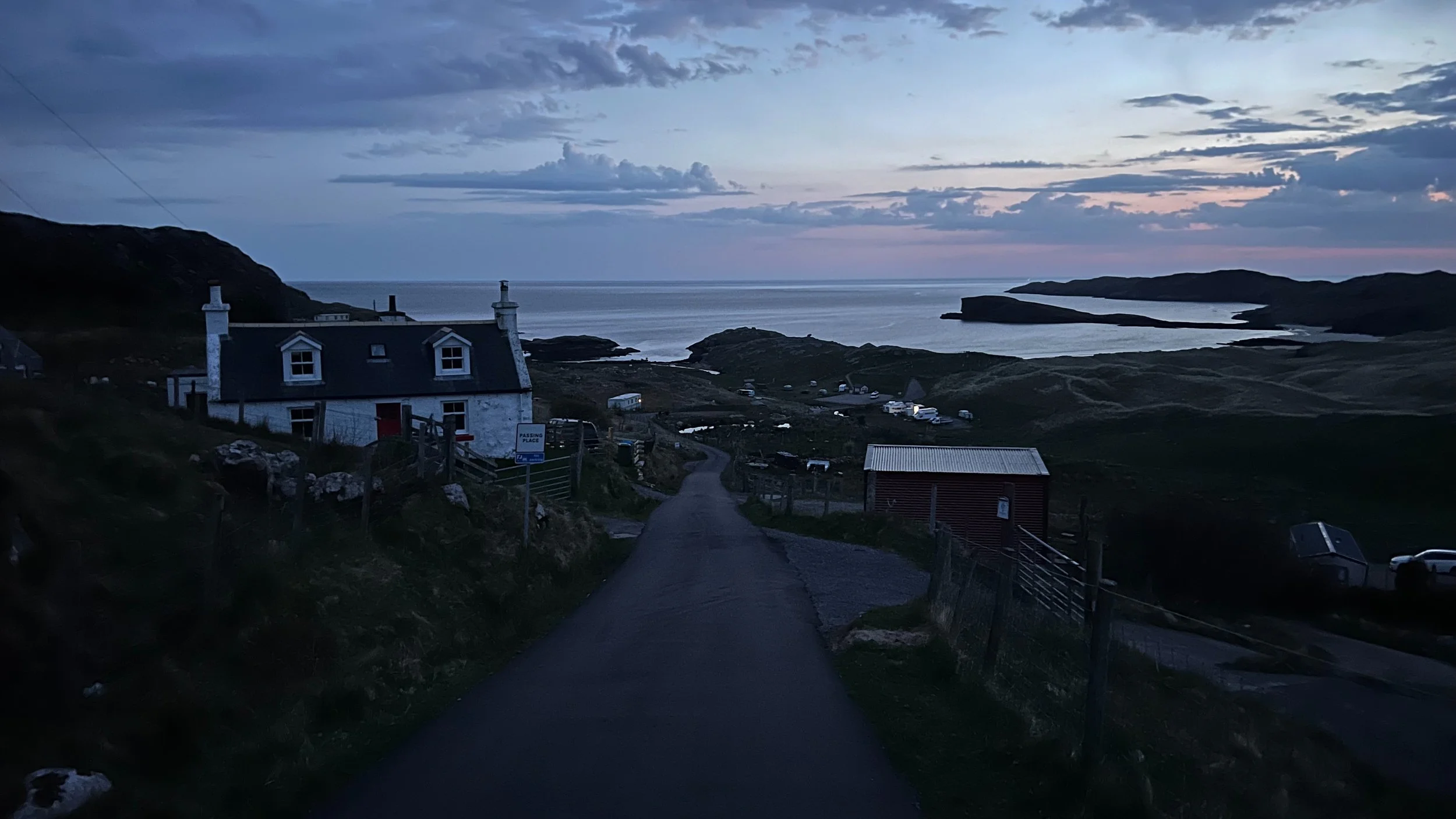
I was up there for much of January and February 2024 doing tech recces, and then moved up more or less full time from March through to the end of May for the shoot. I found a small cottage just above the beach, tiny, rustic, open fire, solitude, and a view that made all of it entirely acceptable. After a couple of weeks the owner vacated the larger cottage next door and I was able to move in. A sun-room overlooking the beach. A walkie-talkie on the dining room table, paperwork in front of me, the set visible from the window. On one or two occasions I watched the shoot unfold from the breakfast table while simultaneously chasing a signature on a location agreement. The commute was one minute.
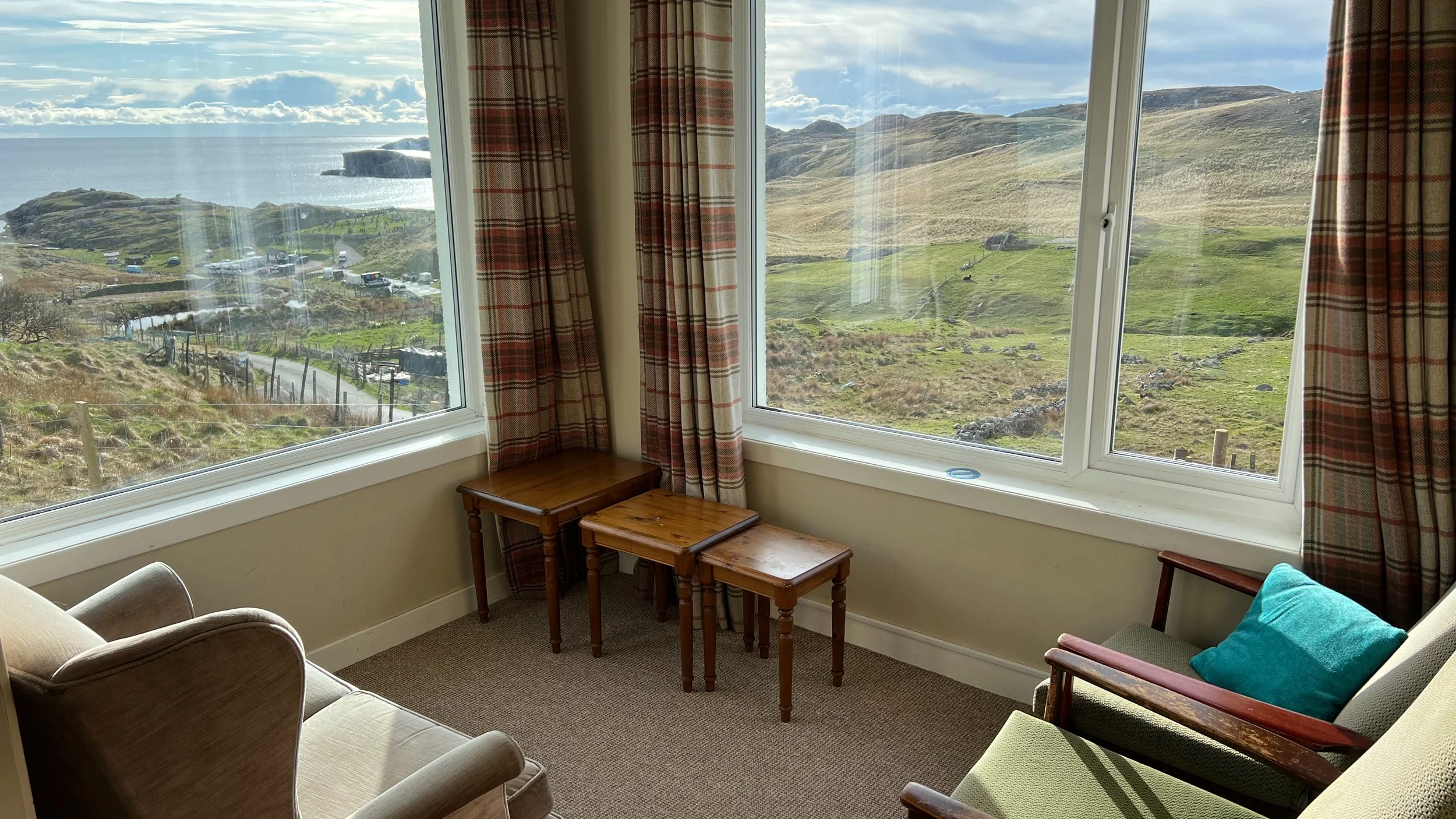
The community up there took us in. A small, tight-knit place where everyone knows everyone and strangers are assessed with a careful eye before being admitted to any degree of warmth. The local shopkeeper, the harbourmaster, initially presenting as a formidable old salt, later revealed once the ice thawed to be generous and kind, the bar staff in the two pubs that serve the surrounding thirty mile radius. You get to know people quickly when the social geography is that concentrated.
There was, it's fair to say, one notable exception to the welcome, a certain large local estate whose factor made it comprehensively clear that they had no interest in our money, our crew, or our cameras, and that we would not be setting so much as one toe on their land. I'll leave it there.
I've spent time in the Highlands before, but not that part of them. It sits so far north that it feels more like the islands, the pace is different, the light is different, the relationship between people and land and weather is different. For the London crew it was another world entirely. For me it was a recalibration. There's no supermarket for hours, so the weekly shop becomes a half-day expedition. The weather sets the terms, not you, and the sooner you accept that the better. But once you find the rhythm of it, it really does get into your blood.
I didn't want to leave when it was over. I still have dreams about it, occasionally. Come to think of it, I'm long overdue a visit.