Stirlingshire, Revisited
Duke’s Pass, Trossachs National Park
Stirlingshire, Revisited
The past couple of weeks I've been doing exactly the kind of job that reminds you why you got into this in the first place. No director to keep happy, no tech recce bearing down on the calendar, no deals to close by end of week. Screen Scotland asked me to work through a list of existing and potential locations across Stirlingshire, photograph them thoroughly, and update their database records. Low stakes, high autonomy. Just a list of places, a full tank, and the instruction to go and look at things carefully. The sort of gig where you remember that the job, at its core, is just paying close attention to places.
Before any of that, though, there's the planning. Anyone who thinks location work begins when you get out of the car hasn't done location work. The first job is to sit down with the list, a map, and a large coffee, and try to construct a route that makes geographical sense, allows a reasonable amount of time at each stop, and accounts for the real-world wrinkles – appointments at private addresses, locations that need advance notice, the places where you simply can't predict how long you'll need until you're standing in them. It's a mild form of plate-spinning, and the plates are all slightly different sizes and spinning at different speeds.
My eight days spread across two weeks ended up looking like this: Stirling city on foot first, then a sweep through Dunblane, Bridge of Allan, Gargunnock and Kippen, then Doune, Deanston, Buchlyvie, Balfron, Fintry and Carronbridge. Then the estates – Keir & Cawder, Touch – then south to Drymen and Rowardennan, then into the Trossachs proper: Aberfoyle, Duke's Pass, Duchray Castle, Loch Achray, Brig o' Turk, Callander. A final day up through Balquhidder and on to Tyndrum. Eight days, a lot of miles, and more laybys than I care to count.
The villages develop their own rhythm after a day or two. Spot a place to leave the car that won't annoy anyone or compromise the shot. Do an up-and-back of the main street, clocking the best angles, the most useful vantages, mentally framing out the ugly road signs and the unfortunate shopfront with the temporary signage. Try to present a fair and truthful version of the place while also making it look its best – which is most of what location photography is, really.
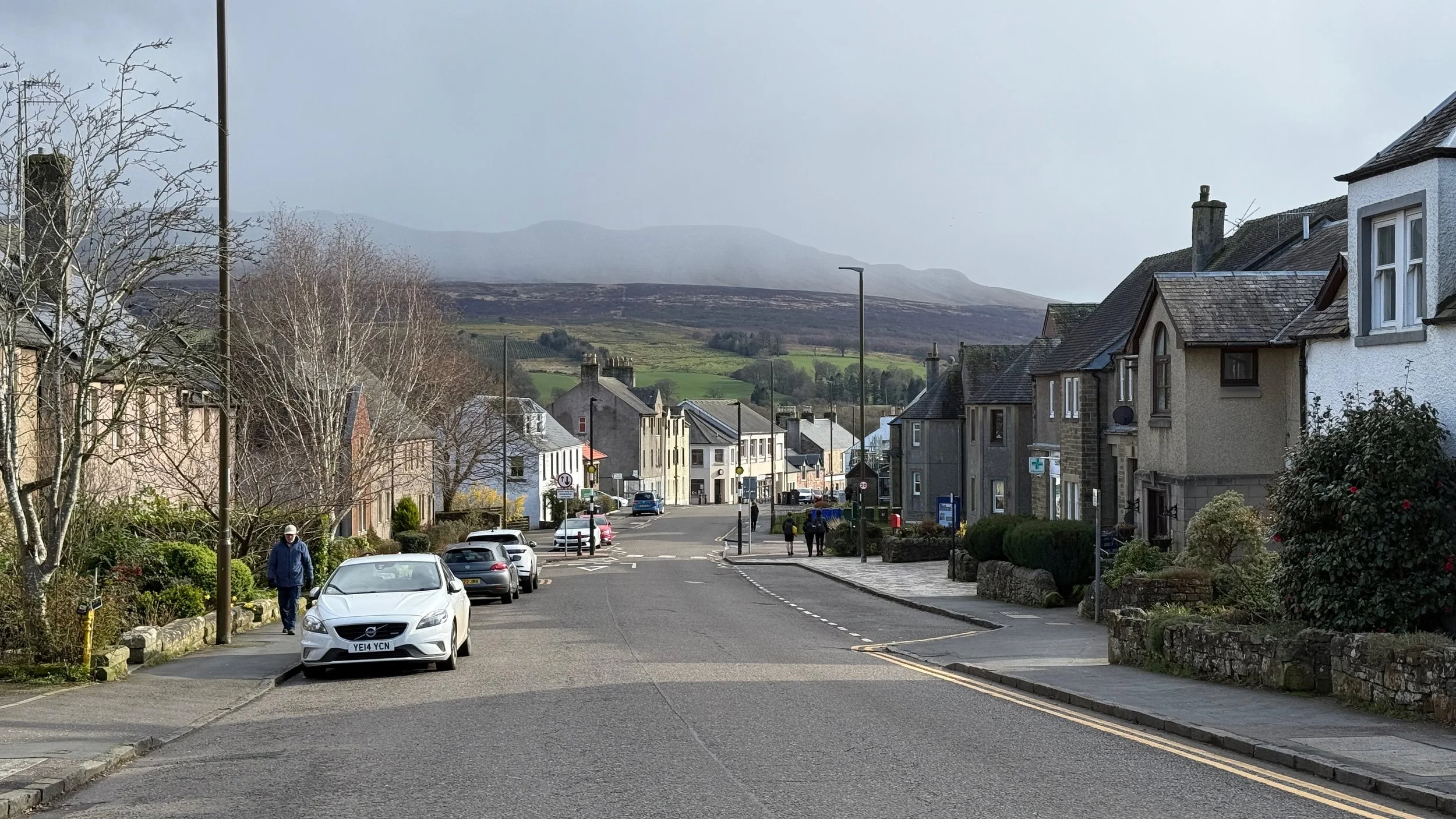
People are their own challenge. Occasionally a figure in the middle distance gives a shot useful scale. More often, they're just in the way. You wait. You frame up. The light is right, the street is clear, the charming period post office is sitting there looking exactly as it should. Nearly there. Nearly. Oh good, she's nearly out of the frame. Nearly. And then a large white delivery van swings into the foreground and parks with great hubris directly in front of everything interesting.
Another reliable feature of the day is the search for decent coffee and lunch. I'll be honest: not every town in Stirlingshire has cracked this yet. Aberfoyle in particular – a gateway to the Trossachs, surrounded by some of the most beautiful scenery in central Scotland – is crying out for a decent deli or takeaway café. The people of the Trossachs deserve focaccia. I'm putting it out there.
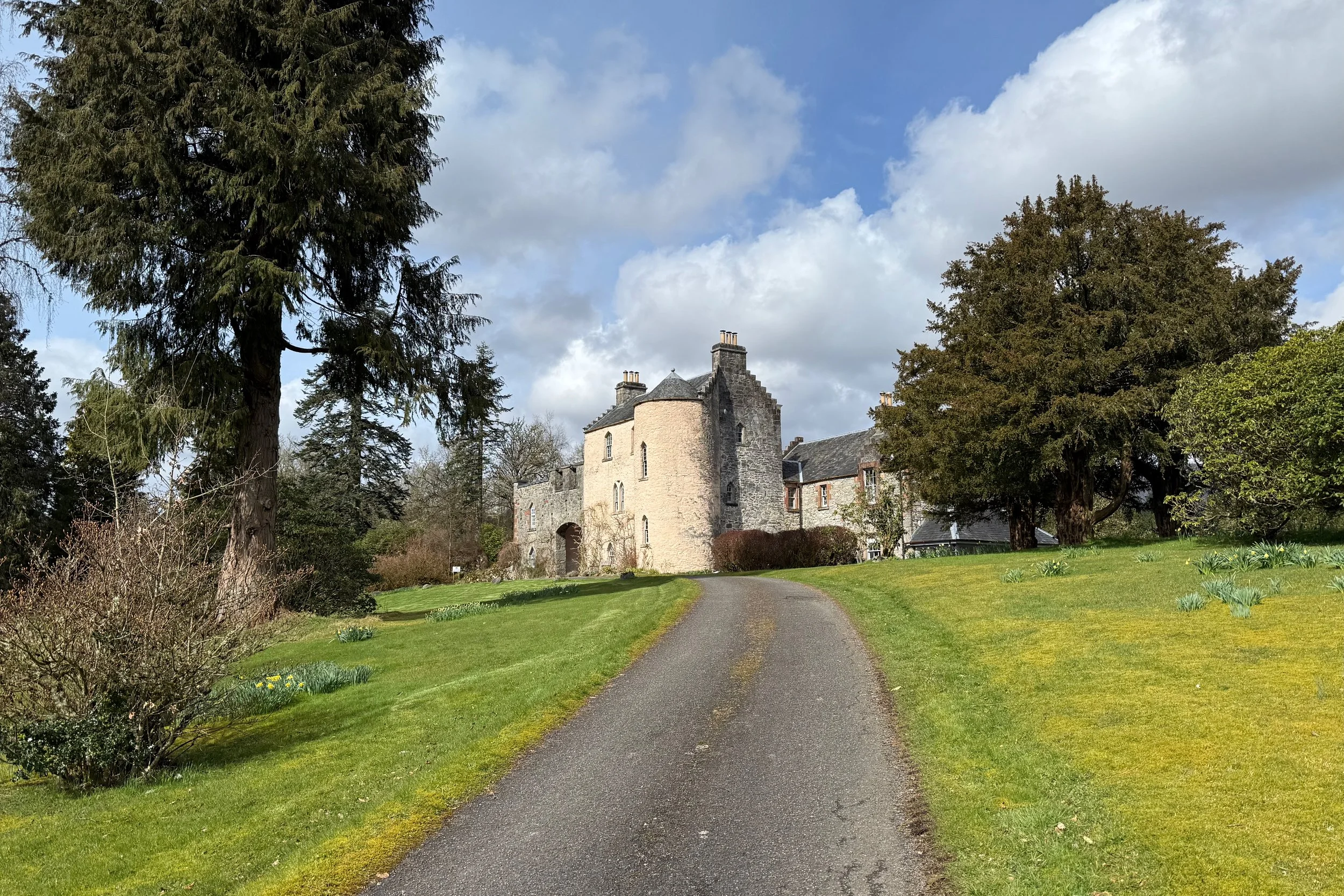
Duchray Castle came first that day – a beautiful spot tucked into a part of the Trossachs you'd only find if you went looking. Private land, so you’d have to go looking for it, and have a reason to be there, though at least that means I essentially had it to myself. The owner met me at the gate and turned out to be easy, friendly company. We walked the grounds together: varied terrain, mature woodland, open pasture, and at the end of it, a lovely old castle building wearing its age well. The kind of morning that fits neatly into the mental file marked "good days to be a location scout."
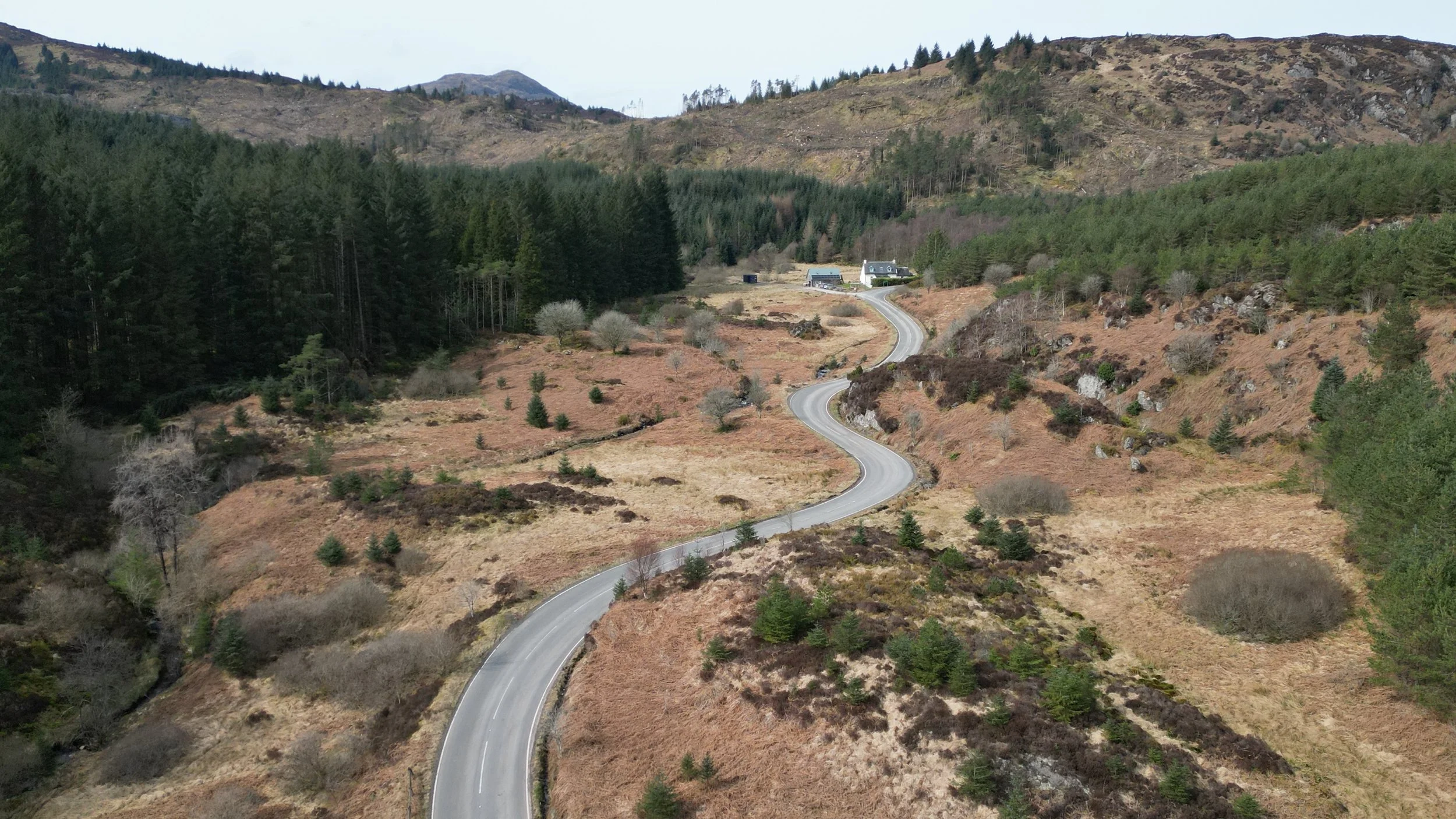
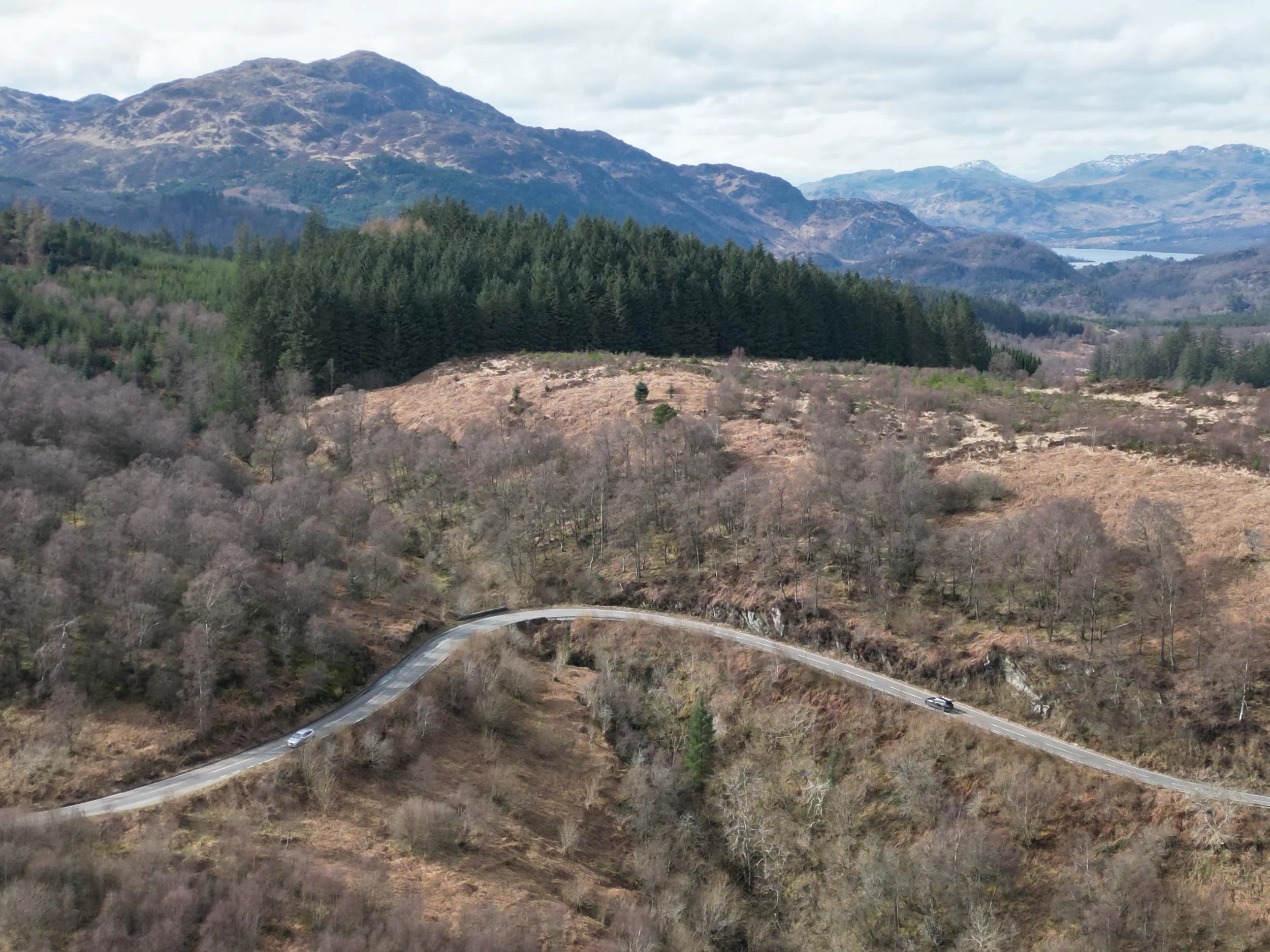
Duke's Pass that afternoon – one of those roads that demands to be experienced rather than just used, the kind where you find yourself slowing down not because you have to, but because it would be a waste not to. The day was clear and bright, the tourist season not yet properly underway, the road quiet save for the odd motorbike threading through, which I'll admit I watched with some envy from four wheels.
The final morning turned dramatic. The weather had been closing in around Balquhidder since early, and I spent the last hour of the scout in a quiet race against it, watching the murk advance down the glen through my lens, trying to get the shots I needed before the visibility dropped and the rain arrived. There's something oddly clarifying (and thoroughly saturating) about that situation, you stop deliberating and just shoot. The added drama of the big black clouds almost makes up for the wet jeans. How come I always leave my waterproofs in the car? How come “I’ll only be a minute” always turns into “how did the car get to be half an hour away from me?”
I've already covered a lot of the ground in Stirlingshire in the past, either through other jobs or just recreational exploration. There's one bit of woodland in particular I was keen to revisit, which sits on an estate where I spent many weeks over the course of several years, working on Outlander. There was a significant set built there, a proper semi-permanent construction that became a familiar backdrop across multiple seasons. I know that wood in a way that most people never get to know a place: in summer and deep winter, in fog and frost, in the quiet of a locked-down pandemic morning when my job was simply to drive out there weekly and make sure everything was still standing.
I remember bitterly cold mornings, the ground frozen solid, sliding on icy aluminium unit base panels in the half-dark, throwing out salt by hand, sweating through thermals while the walkie crackled with competing demands. The particular physical memory of putting my back out one morning heaving temporary track matting into position before the trucks arrived. You carry those things in your body long after the production has wrapped and moved on.
There's been extensive logging since then. The wood looks different now, unfamiliar in places, and I find myself spending longer here than the schedule strictly allows, trying to retrace old paths, match the current landscape to the one I remember. I'm aware I'm on the edge of a nostalgia trip and I should probably keep moving.
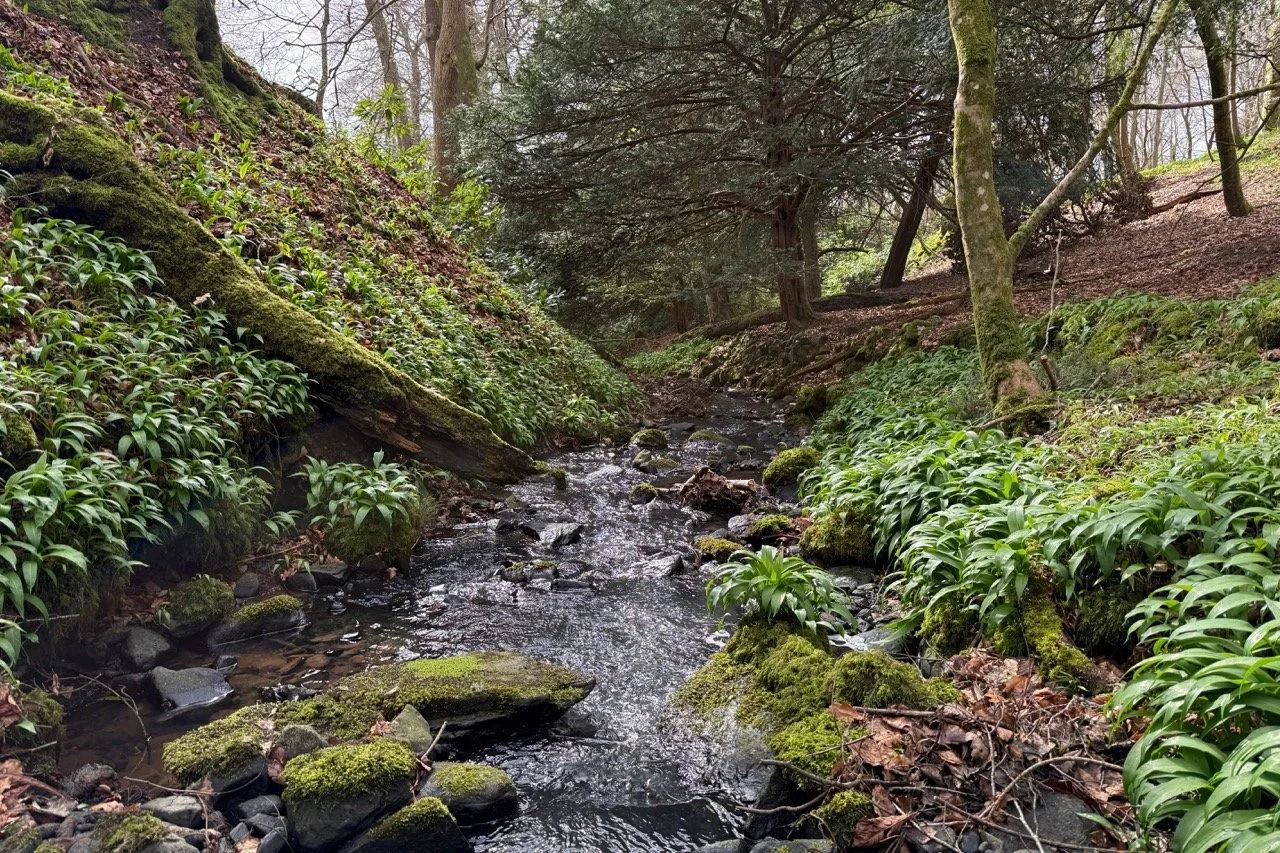
And then I find it, or something better. Just below the area I'd been searching, a small gulley in full spring bloom. A burn cutting through wild garlic and bluebells, an old pine leaning low and cinematic over a small waterfall. I startle three roe deer who hold their ground for a moment, weighing me up, then take off up the far slope with much urgency, glancing back as if mildly put out.
I stand there for a few minutes and let the place be quiet around me.
Then I check the time, think about lunch, and get back in the car.