Succession: Success in the Field
In the summer of 2019 I got a call from a location manager I'd worked with before, asking if I wanted to come on board as Unit Manager for a two-episode Scottish shoot on a show called Succession. I should say that I was already a fan before I got the job, which doesn't happen often. I'd loved Jesse Armstrong's writing for years – The Thick of It, Peep Show – and when the call came in I was delighted to accept. It was a step sideways from my usual role – Unit Manager sits within the locations department but the emphasis shifts towards logistics and away from scouting – and while I'd done it before, I hadn't worked in this role with this exact locations team. A new challenge, and a welcome one. The show was building towards the cultural moment it eventually became.
We needed a Glasgow residence for Logan Roy, which meant spending a very enjoyable few weeks gaining access to some of the finest private homes in the city's wealthier postcodes. The owners of these properties don't particularly need a location fee and don't especially want strangers in their house. The pitch has to be good. Succession wasn't quite a household name yet, but it did have enough prestige to open doors. I found that when money isn't the motivator, bragging rights sometimes are. The thought of mentioning it at the health club seems to move things along.
We also had the pleasure of invading one of Scotland's most exclusive hotels – Gleneagles. A five-star hotel has strong opinions about where you park your trucks. The front entrance was out – eyesore. The service entrance was out – too tight, security concerns. The car parks were needed for guests. Crews object philosophically to pushing kit any further than arm's length, so navigating all of this required a certain amount of diplomacy and creative problem-solving. There in this case meant a car park a somewhat humbling 100 metres from set. Though I will say – the perceived glamour of a Hollywood production can work a limited but occasionally useful amount of magic, and I did eventually manage to get the key trucks right on the doorstep. Small victories.
The locations department also procured a few hotel rooms for green room purposes during the shoot days. Whether those rooms were also quietly enjoyed for a night or two is perhaps a matter between us and Gleneagles. And maybe not even Gleneagles. What I will say is that one evening I found myself alone in the dining room, having spent my afternoon’s wages on dinner. A brief, improbable oasis of calm in the middle of a demanding shoot. The room was beautiful, the food was extraordinary, and a waiter – noticing I was dining solo – very tactfully enquired whether sir would care for a magazine. I accepted enthusiastically. So THIS is how the other half does it – magazines not just for the toilet, but for the dinner table. I could get used to this, given sufficient notice and a reasonable daily rate.
One afternoon, cutting through the hotel corridors between tasks, I bumped into the director coming back from a comfort break, slightly turned around. As I pointed him back towards set, he mentioned – quite enthusiastically, as it happened – that he'd been a fan of Frightened Rabbit. I've learned to enjoy these moments – partly for themselves, and partly for the visible confusion on the ADs' faces when they see the director chatting warmly with someone from locations.
The job also involved finding a stretch of B-road in Ayrshire that could double for the Cotswolds – a mission that required driving miles of country road with an internal camera running, comparing the footage frame by frame with material from a previous series. The kind of forensic, pleasingly nerdy work that doesn't show up on any call sheet but takes up a surprising amount of time.
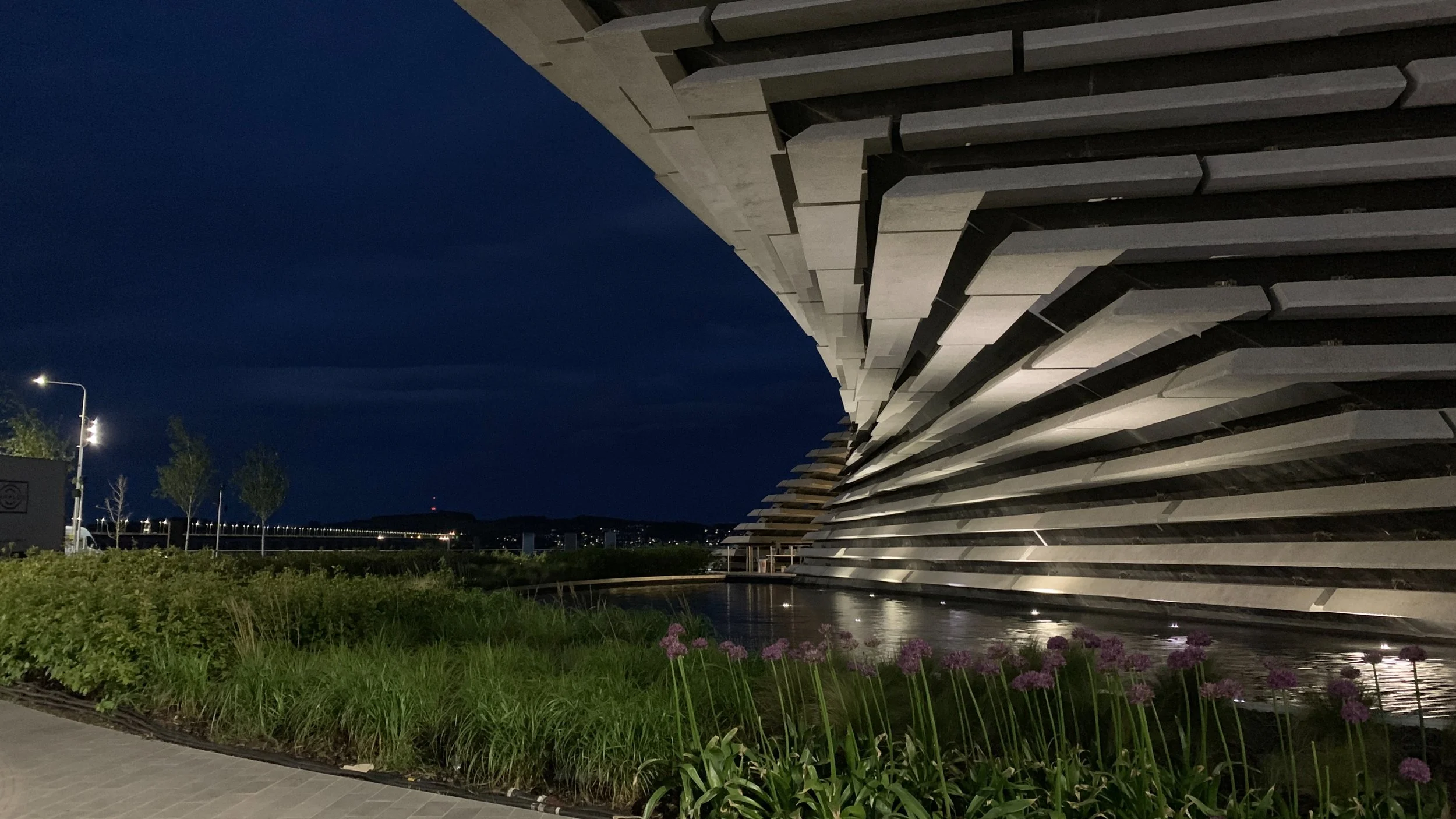
Then we moved to Dundee for the final week, shooting nights inside the V&A while it remained open to the public during the days. There was an agreed entry time on our first contracted evening of access, and I remember vividly – occasionally in what I can only describe as panic-adjacent dreams – the experience of watching the crew begin to silently amass at the perimeter of the unit base about an hour beforehand. A trickle at first, then a battalion. The questions started almost immediately.
"When can we get in."
Not yet.
"We've got a LOT of gear to move."
I know, and I appreciate that – but we have an agreed hard-entry time, as discussed.
"Any extra time would be invaluable."
I'm sure it would.
"Can we not just start pushing kit in."
No. It's 5pm. The load-in time is 5pm. That time has been agreed with the museum. It is currently 4pm. The answer is no. Hold. HOOOOOOLD.
The horde edged forward. We edged backwards, waving arms, flailing hi-vis. 5pm arrived. The doors opened. The hordes rushed in. I mopped my brow, checked my pulse. Order was restored, more or less.
What the hotel bar staff had not fully anticipated was what would happen later that first evening once the off-duty contingent – cast, crew, truck drivers, unit drivers, the full 60-to-100-strong organism that is a film production at rest – descended upon them. It was a Monday night. There were two members of staff. They had stocked accordingly for a Monday night in Dundee, which is to say: adequately, for a Monday night in Dundee.
Within the hour, the glasses were gone. The lager was gone. The bar staff's will to live had gone. They had the look of people who had trained for something, but not for this.
It was chaos, but the good kind. Cast and crew thrown together, inhibitions loosened, everyone briefly equal in their shared thirst and mild bewilderment. I've always thought productions would benefit from a pre-shoot gathering as much as a wrap party – maybe more. By the time you get to the wrap you already know each other. It's the beginning that's awkward, when everyone is still performing professionalism at each other across the catering truck. Get people into a bar on a Monday night in Dundee with insufficient sauce and you'll have a functioning team by Tuesday morning. You've seen the whites of their eyes. You know what makes them tick. You've seen evidence that they are, in fact, capable of joy.
All the kit and set dressing had to be pushed into a cordoned-off area each morning before the museum opened, which the V&A gamely dressed up as some sort of display. Needs must.
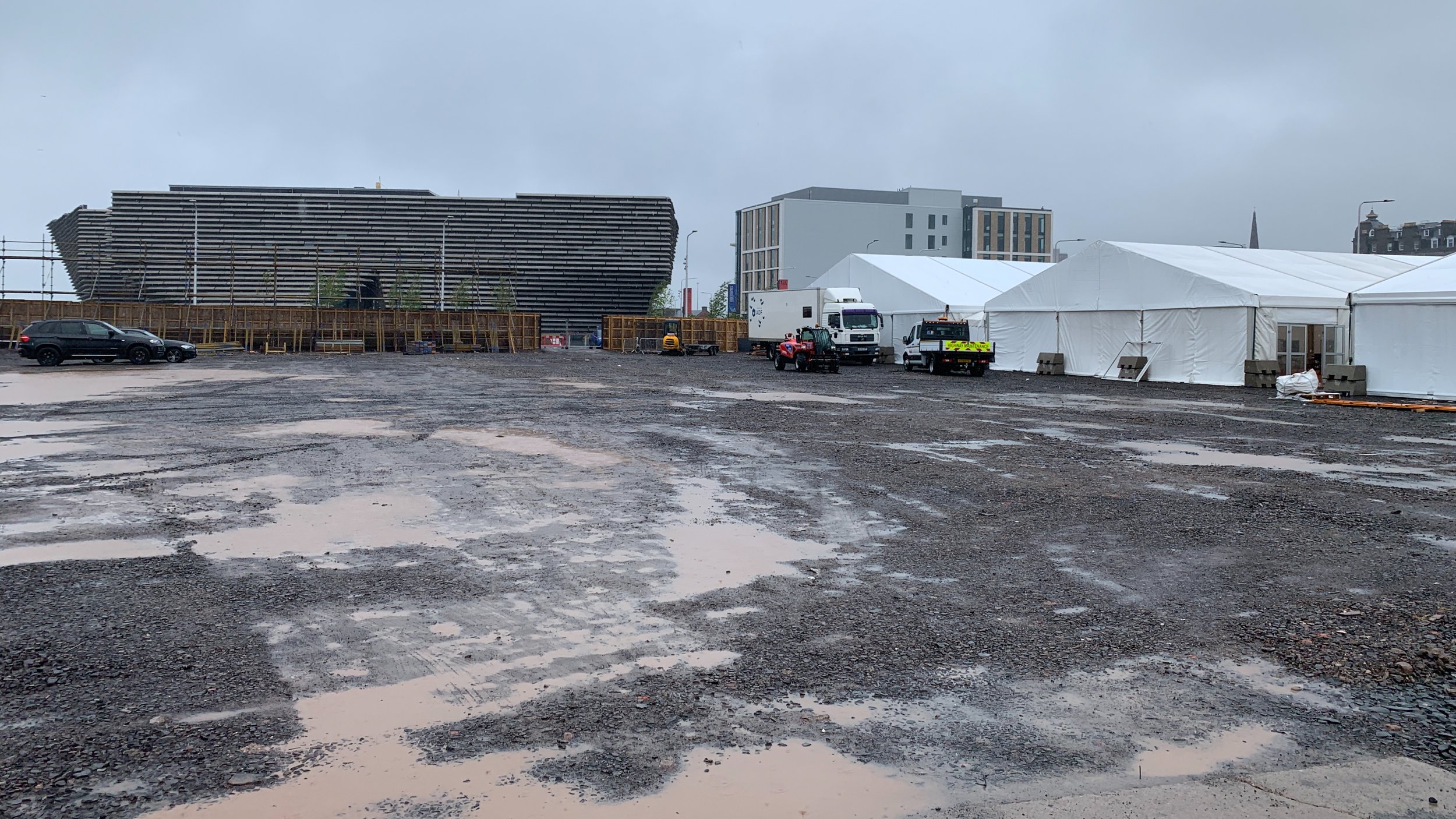
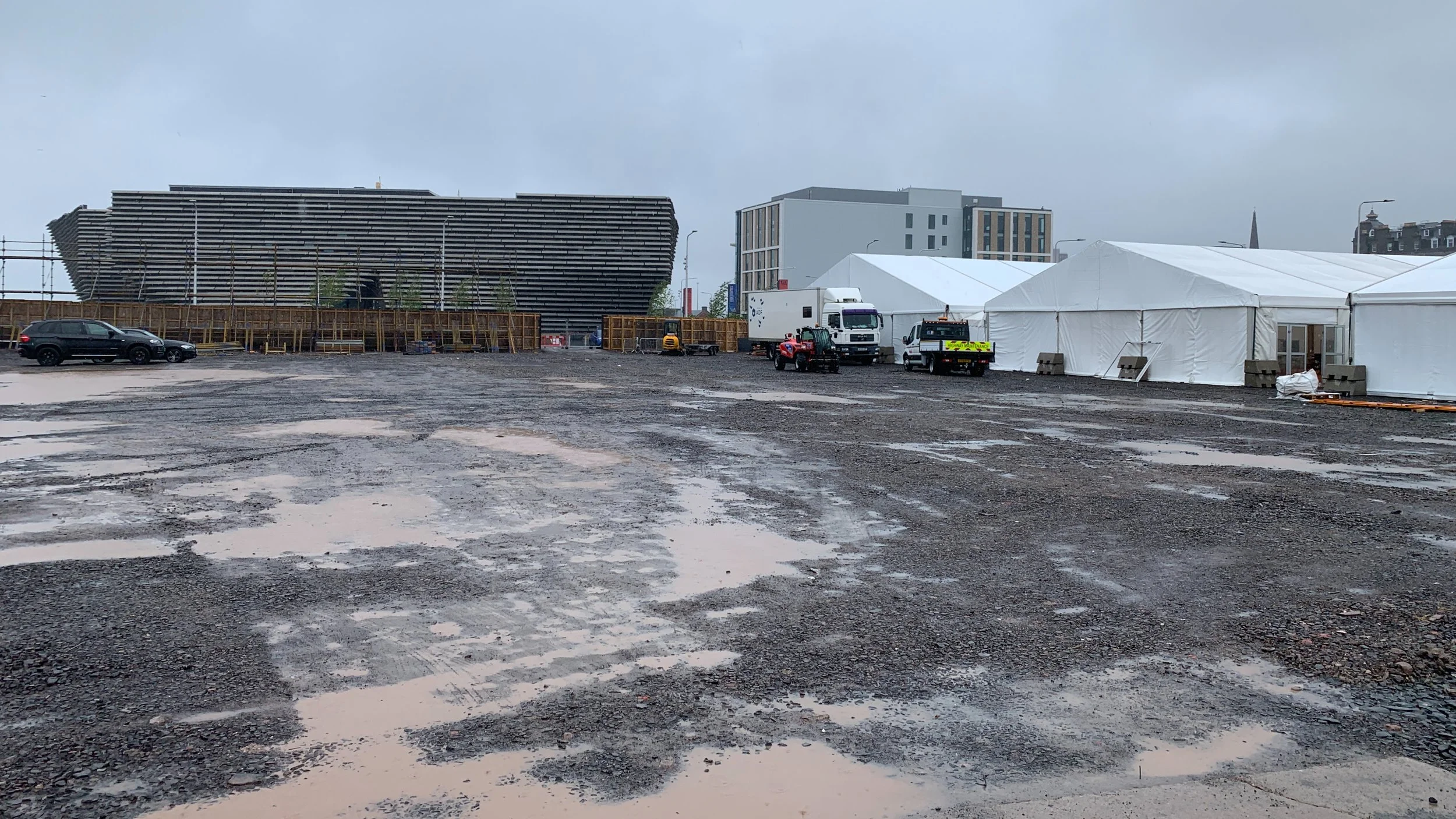
The unit base situation was one of the more complicated logistical puzzles of my career. There was a brownfield site right next door – perfect in theory – but several scenes were being shot outside, which meant the trucks couldn't be visible on camera. The site was also exposed to the water and prone to serious wind. Getting a hoarding extension built, structurally certified, properly ballasted and installed took the better part of three weeks of negotiation between film industry timelines and CDM requirements – roughly the collision you'd expect between two entities with completely opposite relationships to the concept of doing things properly. In the end it came together. A large marquee for the 200 extras attending the gala scene, prep spaces for costume and make-up. I'm fairly sure I received compliments about those spaces from the relevant departments. Though by that point I was running on split days and fast-depleting reserves of goodwill, so I may have imagined it.
The highlight of the Dundee shoot, and what turned out to be a highlight of the series, was Kendall's rap. Word had been circulating for days that it was on the schedule, that it wasn't getting pushed, that tonight was the night. I was technically on days that week – keeping things running during business hours, handing over to our assistants for the actual shoot. But I wanted to see this one. So after dinner and a couple of beers, I quietly let myself back onto set and watched from the shadows, mindful that arriving post-pub to a film set is the sort of thing that can attract comment.
It was worth it. The extras and crew present that night were, I can report, exactly as baffled and second-hand embarrassed as the crowd in the finished scene. Which is either a testament to the writing and direction, or just an accurate representation of how most people respond to an unexpected rap. Probably both.
And then, completely unrelated to the rap, there's also a cast transport anecdote which requires a small amount of context. As Unit Manager, part of my job is managing the logistics of getting people and equipment from A to B – and being very clear, well in advance, about what A and B can and cannot accommodate. On this occasion, I had communicated several times, clearly, that a particular splinter location could take a specific number of vehicles and no more. I had done this with the patience of a man who has had this conversation before and knows how it ends.
It ends with you having the same conversation again, through a car window, five minutes before departure.
The upshot of that final hurried exchange was that there was, in fact, only room for one cast transport vehicle, and that therefore one of the Roy siblings would need to travel with me. The back door of my car was opened. Said Roy was installed. The door was closed – perhaps with marginally more emphasis than was strictly necessary. We set off.
It wasn't awkward. Polite hellos were exchanged. Airpods went in. I concentrated on keeping the convoy together and getting us there in reasonable time. The location was about twenty minutes away.
After about ten minutes, one airpod came out.
"How bout here?"
Just a few more minutes, I said. There's a specific bridge.
The airpod went back in. A couple of minutes passed.
"How bout here?"
Nearly there, I said.
When we arrived at the bridge, it became clear why the questions had been increasing in urgency. My passenger exited the vehicle, positioned himself directly in front of the bonnet and – facing away, I should say, facing away – attended to the matter with some relief and considerable commitment.
The scene itself took about five minutes to shoot before the light gave out. I drove him back to base.
"Thanks man."
... god, its great hobnobbing with the stars isn't it.